Archive
Stories, in full
A record of albinism news, research, and advocacy from trusted sources around the world. Reviewed by a human editor before publication.

Jane Kasweka
Livingstone, Zambia
Delphile Bandha
Livingstone, Zambia

Purity Kashweka
Livingstone, Zambia

Dorcus Siabasimbi
Livingstone, Zambia
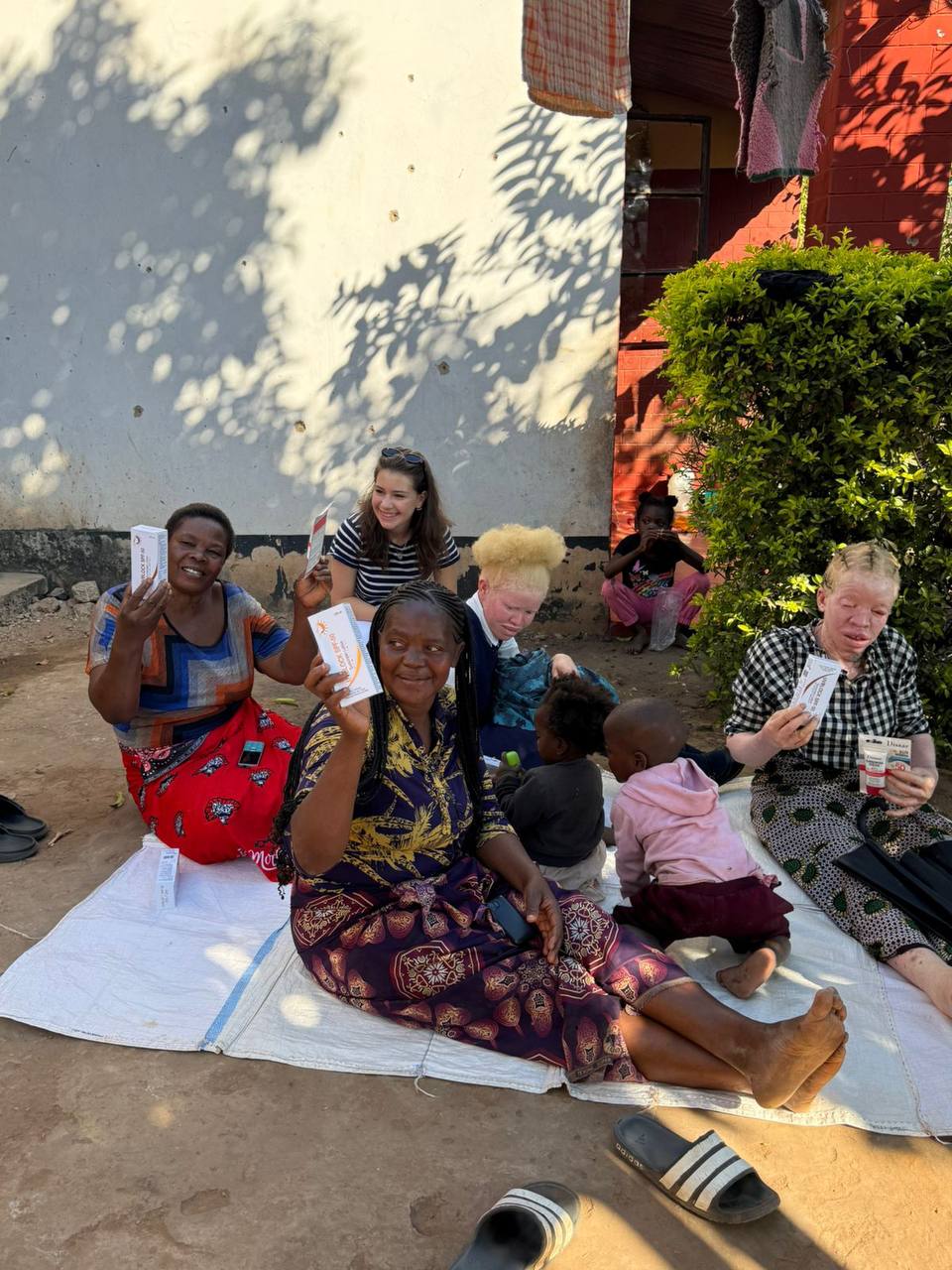
Carolina Khaskelis from the United States is visiting Livingstone, Zambia, where she is spending time with members of the local albinism community, including Jane Kasweka, Delphile Bandha, Purity Kashweka, and Dorcus Siabasimbi. Alongside distributing essential sunscreen, Carolina is listening to their stories and learning more about their experiences, challenges, and hopes for the future.
 Health & Sun ProtectionJournal of Investigative Dermatology
Skin disease burden in Tanzania: what the data miss
A survey at a Moshi dermatology centre reveals how global disease estimates undercount skin conditions across sub-Saharan Africa. The gap matters for people with albinism.
 Health & Sun ProtectionJournal of Investigative Dermatology
UK-Myanmar teledermatology trial bridges a skin-care gap
A cross-border initiative between the UK and Myanmar is testing whether remote dermatology consultations can reach patients who have no realistic path to a specialist. The Journal of Investigative Dermatology reported on the project.
 Health & Sun ProtectionJournal of Investigative Dermatology
New tool maps skin bacteria across the face in 3D
Researchers have developed a method to visualise microbial density continuously across facial skin, moving beyond the cheek-and-forehead sampling that limited earlier studies.
 Health & Sun ProtectionJournal of Investigative Dermatology
Capsaicin patch study tracks itch nerve recovery over time
A Journal of Investigative Dermatology study examined how long an 8% capsaicin patch suppresses itch signalling and axon reflex activity after a single one-hour application.
 Health & Sun ProtectionJournal of Investigative Dermatology
Sun exposure shifts the skin's circadian clock
New research in the Journal of Investigative Dermatology finds that photoexposed and photoprotected skin follow different circadian rhythms in the same person.
 Health & Sun ProtectionJournal of Investigative Dermatology
How UVB radiation activates melanocyte stem cells
A study in the Journal of Investigative Dermatology identifies a protein that drives skin's response to UV exposure, with direct implications for pigmentation research.
 Health & Sun ProtectionJournal of Investigative Dermatology
Uveal melanoma: treatment limits and new cell therapies
A review in the Journal of Investigative Dermatology outlines why uveal melanoma remains difficult to treat — and where natural killer cell therapy may change that.
 Health & Sun ProtectionJournal of Investigative Dermatology
mRNA vaccine research turns toward skin delivery
A study in the Journal of Investigative Dermatology examines how mRNA technology could be delivered through the skin, targeting immune cells that live in its outer layers.
 Health & Sun ProtectionJournal of Investigative Dermatology
IL-15 pathway named a target in vitiligo research
A study in the Journal of Investigative Dermatology identifies immune memory cells as a key driver of vitiligo recurrence, pointing to the IL-15 pathway as a potential therapeutic target.
 Health & Sun ProtectionJournal of Investigative Dermatology
Proteomics study maps how vitiligo skin repigments
Researchers screened over 5,000 proteins to understand why some vitiligo patients regain pigment during treatment. The findings may shape future therapies for related pigmentation conditions.
 Health & Sun ProtectionJournal of Investigative Dermatology
A new biosensor could replace human sunscreen trials
Researchers have developed a cell-based UV-A detection tool that may make sunscreen testing faster, cheaper, and more consistent — without human volunteers.
 Health & Sun ProtectionJournal of Investigative Dermatology
Skin inflammation and pigmentation share a genetic link
A study in the Journal of Investigative Dermatology finds that rare genetic variants connect a chronic inflammatory skin disease to a hereditary pigmentation disorder.
 Health & Sun ProtectionJournal of Investigative Dermatology
Skin produces and responds to serotonin, study finds
A Journal of Investigative Dermatology study finds human skin acts as a local serotonin system, with implications for pigmentation and tissue repair research.
 Health & Sun ProtectionJournal of Investigative Dermatology
Skin bleaching crisis: what the research found
A study in the Journal of Investigative Dermatology maps the global scale of skin bleaching and the compounds driving its health consequences.
 Africa FocusUNHCR Africa
Malawi's long struggle against attacks on albinism
Violence against people with albinism persists in Malawi despite years of advocacy. UNHCR Africa reports the country has yet to find lasting solutions.
 Health & Sun ProtectionJournal of Investigative Dermatology
Skin bacteria trigger lasting immune changes in keratinocytes
A Journal of Investigative Dermatology study finds that Cutibacterium acnes reprograms immune memory in skin cells differently depending on body region.
 Health & Sun ProtectionPubMed — Albinism Research
Manchester eye genetics study draws in local MP
A Manchester University NHS Foundation Trust study into genetic eye conditions has recruited a local MP as a participant, bringing rare visibility to inherited vision research.
 Human RightsOHCHR — Independent Expert on Albinism
UN racial discrimination committee examines Rwanda's record
The Committee on the Elimination of Racial Discrimination has reviewed Rwanda's human rights record, with protections for people with albinism among the issues under consideration.
 Health & Sun ProtectionPubMed — Albinism Research
A drug shown to raise melanin in some people
Early research suggests a compound can increase melanin production in certain people with albinism, though findings remain preliminary. The science is cautious, and so are the researchers.
 Health & Sun ProtectionPubMed — Albinism Research
Pale melanomas can hide behind albinism genes
New research finds that melanomas in people with albinism may lack the dark pigment clinicians rely on to spot them, complicating early detection.