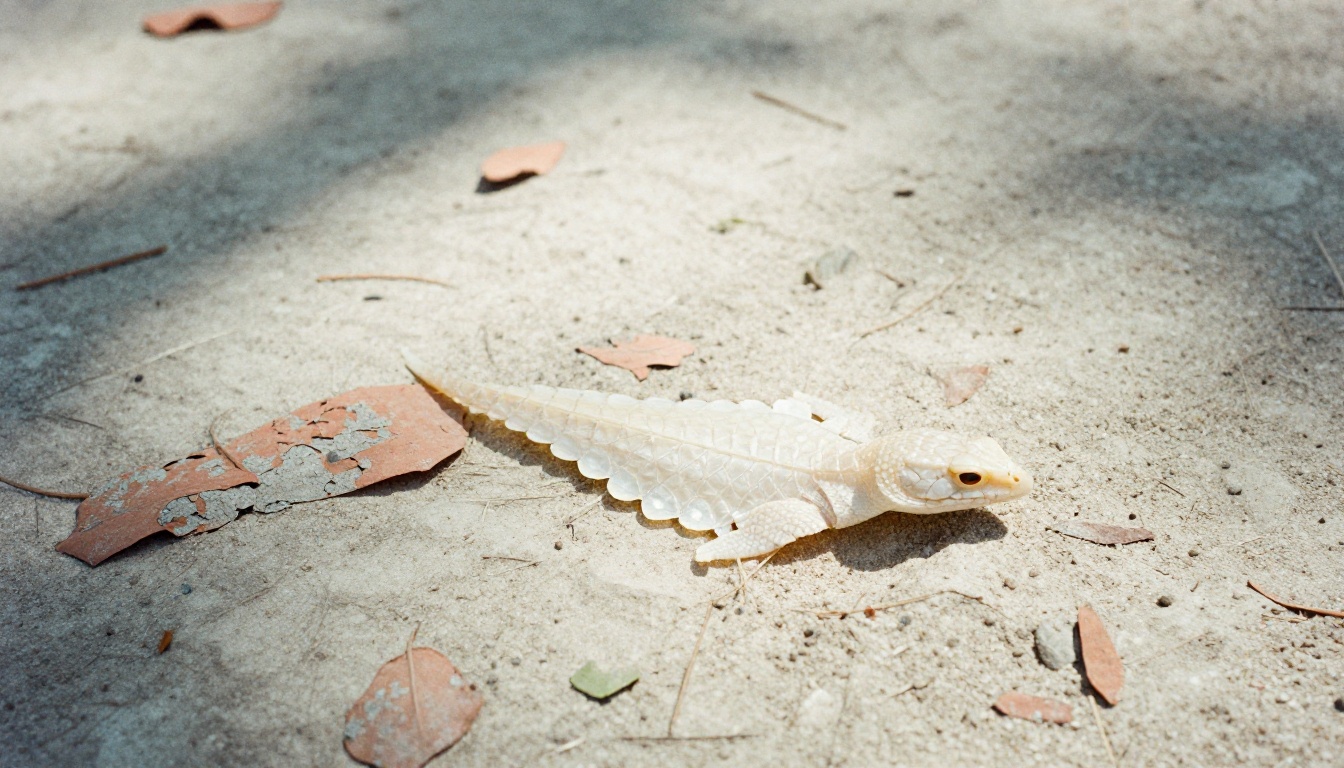
Australian researchers used CRISPR to create toads with albinism, measuring how the absence of melanin affects survival, heat tolerance, and UV defence.
A cane toad sits in full Queensland sunlight. Without melanin, it burns.
Researchers in Australia used CRISPR gene-editing to produce cane toads with albinism, then studied what the absence of pigmentation actually costs an animal in biological terms, according to a study reported by Australian Geographic. The work offers some of the clearest experimental evidence yet for why melanin persists so strongly across animal species.
The gene-edited toads showed measurably lower heat tolerance than pigmented individuals, the study found. Melanin absorbs and distributes solar radiation across the skin; without it, core temperature regulation becomes less efficient under direct sun exposure.
UV damage was the second pressure the researchers documented. Pigmented skin filters ultraviolet radiation before it reaches deeper tissue. In the albinism toads, that layer of protection was absent, and markers of UV-related cellular stress were higher, according to the report.
The toads with albinism also showed reduced survival rates in outdoor conditions compared to controls, Australian Geographic noted. The researchers attributed this to the combined effect of thermal stress and UV exposure rather than to any single factor.
What the toad tells us
Cane toads are not a flattering species — they are among the most studied invasive animals on earth precisely because they are hardy. That makes the survival gap meaningful. If albinism carries a measurable cost even in a robust, adaptable animal, the researchers argued, it clarifies why natural selection consistently maintains pigmentation across vertebrates.
The findings also add experimental weight to what dermatologists have long observed in people with albinism: the absence of melanin is not a neutral variation in high-UV environments. It places a real and ongoing demand on the body's other defences — and, in humans, on access to shade, protective clothing, and sunscreen.
The study does not draw direct clinical conclusions about people with albinism. But it offers something useful: a controlled, measurable demonstration of what melanin does, stripped of the complexity of a single human life.
For communities where sun protection resources remain scarce, that kind of evidence has its own quiet weight.
Keywords
Core topics and entities mentioned in this summary.