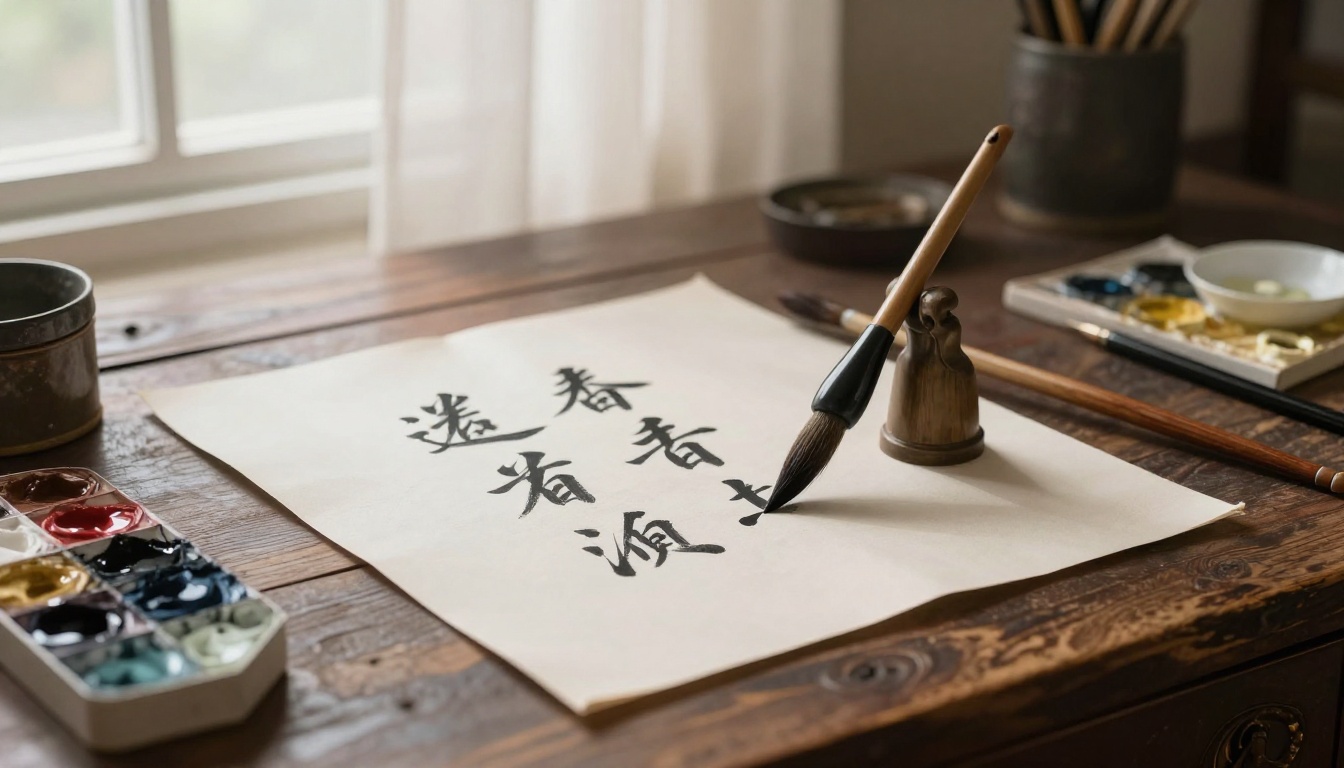
Exploring the legacy of Xu Beihong (1895-1953), a pivotal figure in modern Chinese art who integrated Western techniques with traditional Chinese painting.
In the landscape of modern Chinese art, few figures stand as prominently as Xu Beihong (1895–1953), whose artistic journey represents a fascinating bridge between Eastern and Western artistic traditions.
According to the Journal of Investigative Dermatology, Xu Beihong is widely regarded as a key figure in shaping modern Chinese painting. His artistic foundation began with calligraphy and ink painting, skills he learned from his father. His horizon expanded significantly when he traveled to Paris in 1919 to study oil painting and drawing at the prestigious École Nationale Supérieure des Beaux-Arts.
The source notes that Xu became particularly renowned for his powerful ink-and-wash images of horses and birds, works that demonstrated his masterful integration of techniques. His artistic philosophy was groundbreaking for its time - the journal reports that he was among the first Chinese artists to advocate for painting that responded to the realities of modern China while selectively incorporating elements of Western realism.
Xu's approach to art represents an important cultural conversation between traditions, showing how artistic expression can evolve while honoring its roots. His work continues to influence contemporary artists and reminds us of art's power to transcend cultural boundaries.
While this historical artistic figure may seem distant from immediate albinism concerns, his story exemplifies how embracing diverse influences can lead to powerful new forms of expression - a metaphor that resonates with many communities seeking to honor their unique perspectives while engaging with broader society.
Keywords
Core topics and entities mentioned in this summary.