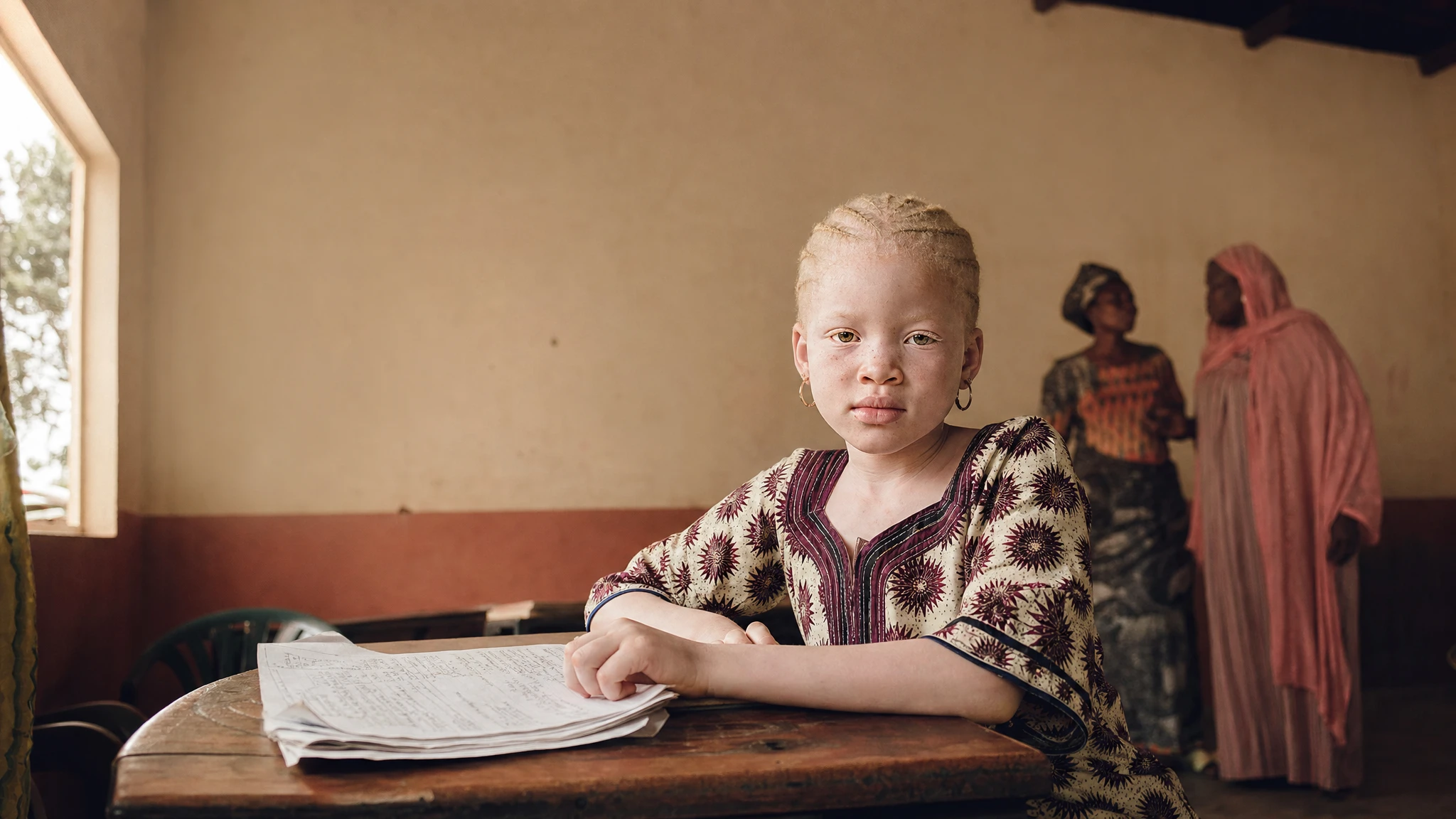
A joint submission to the UN Committee on the Rights of the Child outlines the specific risks facing children with albinism in The Gambia.
A child with albinism in The Gambia faces a particular set of pressures — from inadequate sun protection to the threat of ritual-motivated harm — that the country's existing child protection frameworks have not fully addressed. A joint submission to the UN Committee on the Rights of the Child, filed through the OHCHR Treaty Body Database, sets out those conditions in detail.
The submission was co-authored with the Independent Expert on Albinism, the UN mandate holder responsible for monitoring the human rights situation of people with albinism worldwide. It was submitted as part of The Gambia's review cycle under the Convention on the Rights of the Child.
What the submission covers
The report identifies children with albinism as a group requiring specific protection measures within national law and policy, according to the submission. It addresses gaps in access to healthcare — including dermatological services and visual support — as well as the persistence of harmful beliefs that put children at risk of violence or abandonment.
The submission also raises concerns about educational inclusion, the document states. Children with albinism in The Gambia frequently face barriers to learning rooted in both physical environment — classrooms with poor lighting or inadequate shade — and social stigma that discourages attendance or full participation.
The Committee on the Rights of the Child uses submissions of this kind to inform the questions it puts to governments during formal reviews. Findings documented here can shape the official recommendations the Committee issues to The Gambia.
Why this filing matters
The Gambia is not among the countries most frequently cited in coverage of attacks on people with albinism. That relative absence from international headlines does not mean conditions are adequate. Submissions like this one exist precisely to surface what country-level reporting often leaves out.
The Independent Expert on Albinism, currently Dr. Muluka-Anne Miti-Drummond, holds a mandate created by the UN Human Rights Council in 2015. Her office has consistently documented how children with albinism carry disproportionate exposure to rights violations — including violence, exclusion from school, and denial of medical care — across multiple regions.
A formal recommendation from the Committee to the Gambian government would create a documented, reviewable obligation to act.
The full submission is available through the OHCHR Treaty Body Database.
Keywords
Core topics and entities mentioned in this summary.