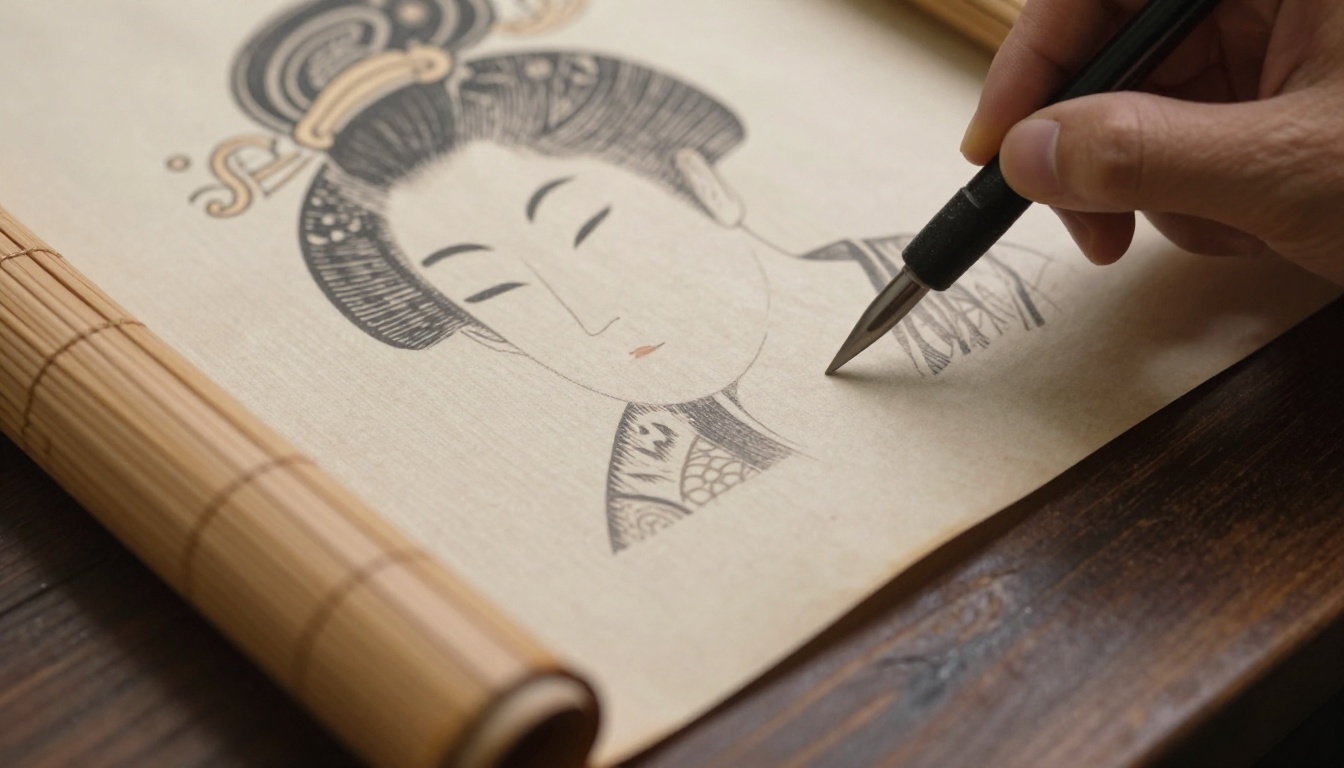
Examining how renowned Japanese woodblock master Utagawa Kuniyoshi used skin and face imagery to challenge viewers' perceptions in 19th century art.
The rich tradition of Japanese woodblock printing (ukiyo-e) offers fascinating insights into historical perceptions of appearance and identity. A recent analysis in the Journal of Investigative Dermatology highlights two remarkable prints by Utagawa Kuniyoshi, a master artist from the 19th century Edo period, that use skin and facial features as surfaces of artistic illusion.
According to the journal article, Kuniyoshi's work stands out even among the diverse ukiyo-e tradition for its innovative approach to visual representation. The prints examined create a deliberate tension between casual seeing and more intentional looking — challenging viewers to reconsider their perceptions.
While fascination with disguise and transformation was common during the Edo period, researchers note that Kuniyoshi pushed artistic boundaries further. The article suggests his approach went beyond simply depicting visual transformations to create complex layers of meaning through his portrayal of skin and faces.
Cultural Context and Artistic Innovation
The Edo period (1603-1867) saw tremendous cultural development in Japan, with woodblock prints becoming an accessible art form that documented social life, folklore, and artistic innovation. Kuniyoshi's contributions to this tradition, as highlighted in the journal, demonstrate how artists have long explored human appearance as a canvas for deeper meaning.
This historical perspective offers valuable context for contemporary discussions about appearance diversity and visual literacy. Through studying how past cultures represented and interpreted visual differences, we gain insights that can inform today's conversations about perception, appearance, and identity — themes particularly relevant to communities with visible differences like albinism.
The journal's analysis reminds us that artistic representations have powerful roles in shaping cultural understandings of appearance, and that developing visual literacy — the ability to critically interpret images — remains as important today as it was in Kuniyoshi's time.
Keywords
Core topics and entities mentioned in this summary.