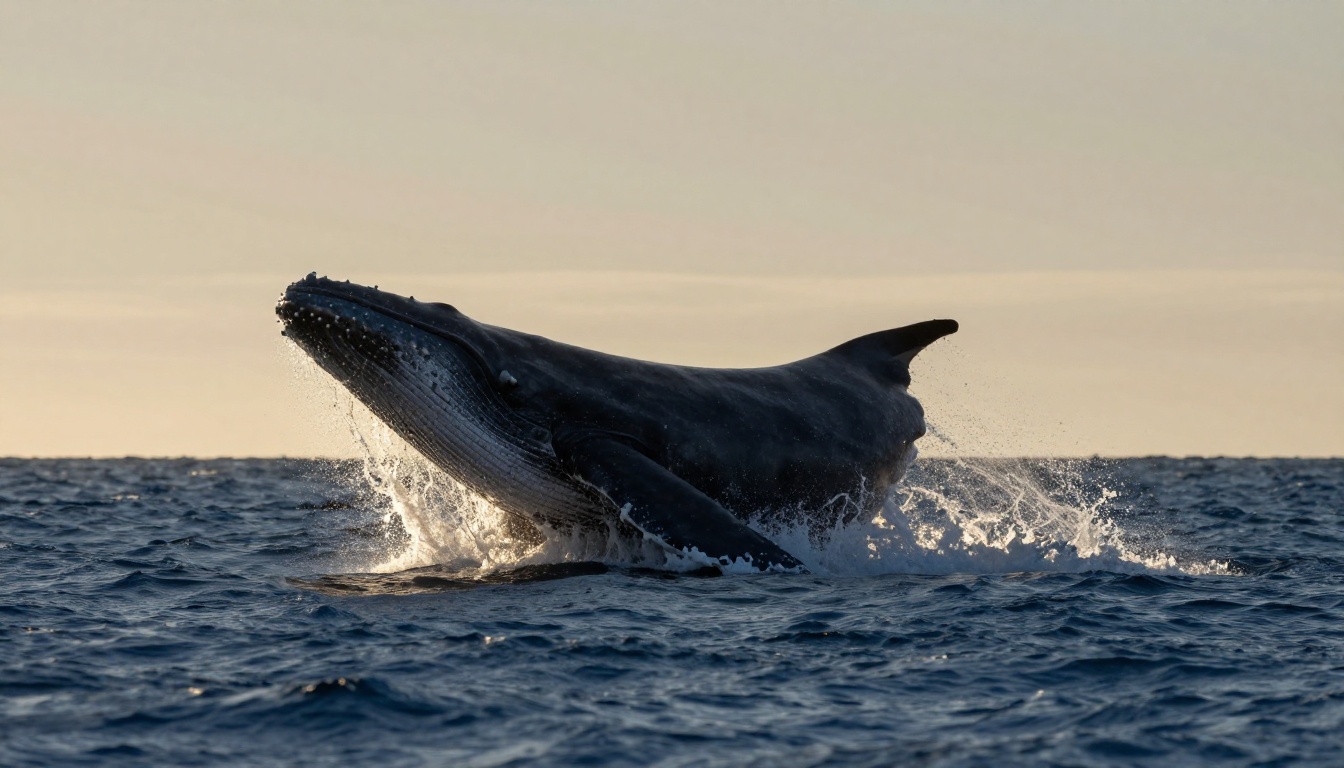
Scientists report the unprecedented sighting of a blue whale with albinism, highlighting the occurrence of this genetic condition across diverse species.
In a remarkable wildlife discovery that reminds us how albinism occurs across many species, researchers have documented a blue whale with albinism in what People.com describes as an "unprecedented milestone."
The rare sighting took place in a national park, though specific details about location and timing remain limited in the initial report. Blue whales are already among the most majestic and rarely-seen marine mammals, making this documentation of one with albinism particularly significant for marine biologists and conservation experts.
Albinism, a genetic condition that affects melanin production resulting in little or no pigmentation, occurs in many species throughout the animal kingdom, from humans to birds, reptiles, and marine life. However, according to the report, documenting this condition in a blue whale—the largest animal on Earth—represents an exceptional scientific observation.
Understanding Cross-Species Albinism
Albinism manifests differently across species, but the underlying genetic mechanisms share similarities. In most cases, the condition affects the development of melanin, the pigment responsible for skin, hair, and eye color. In marine mammals like whales, albinism can create distinctive appearance differences from their typically pigmented counterparts.
While albinism in humans comes with specific health considerations like vision impairments and sun sensitivity, the impact on whales may differ significantly. Marine biologists will likely study this rare individual to better understand how albinism affects blue whales' life patterns, social interactions, and survival strategies.
This documentation provides a unique opportunity for expanding our understanding of genetic conditions across species boundaries, potentially offering insights that bridge marine biology and human genetics in unexpected ways.
Keywords
Core topics and entities mentioned in this summary.