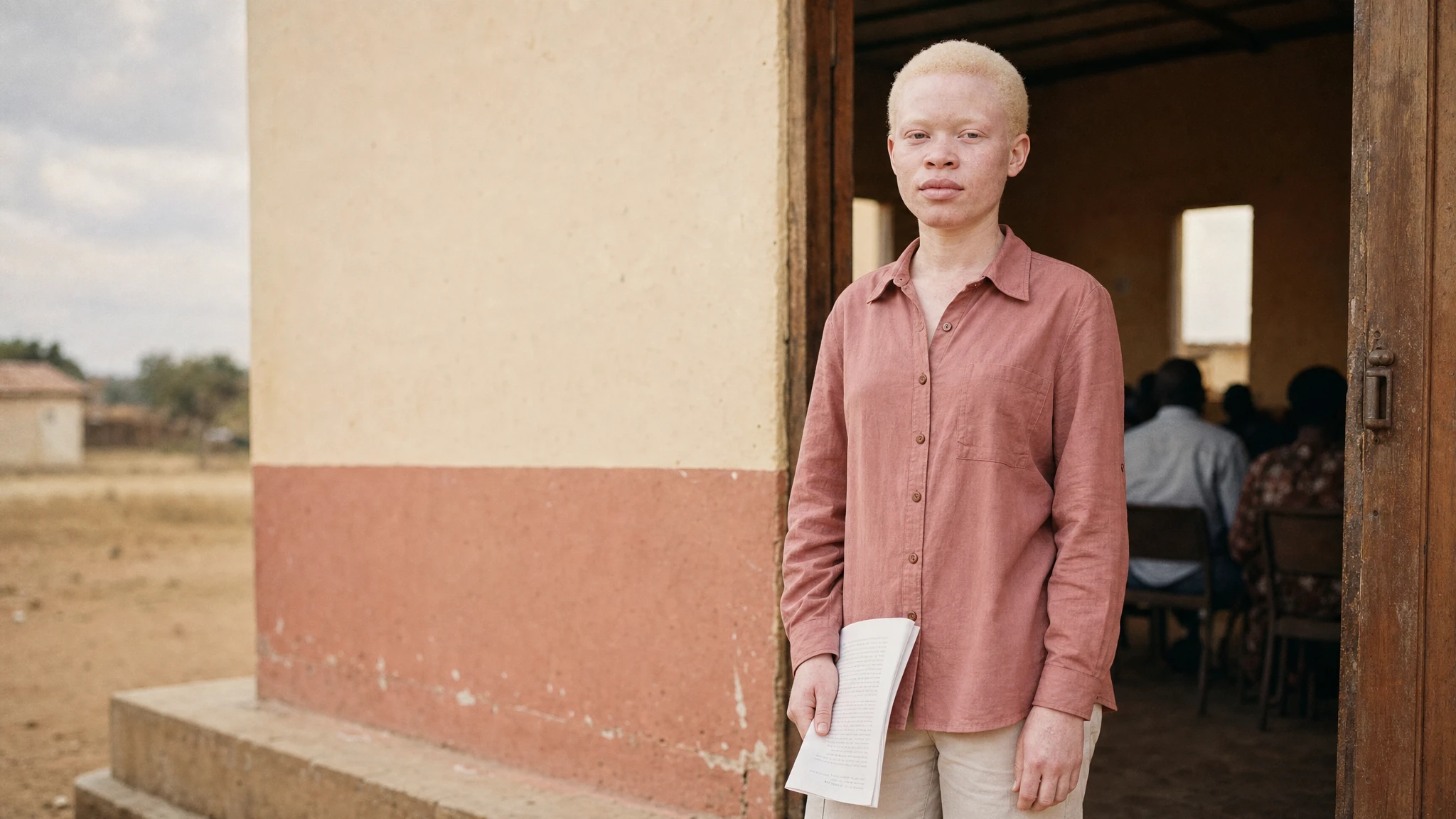
The UN Independent Expert on Albinism has called for an end to dehumanising beliefs that treat people with albinism as supernatural. The statement urges recognition of full personhood and legal protection.
A phrase repeated in communities across Sub-Saharan Africa holds that people with albinism are ghosts — spirits without souls, beings that exist between worlds. The UN Independent Expert on Albinism has named that belief directly, and rejected it.
What the Independent Expert said
In a statement published by the Office of the UN High Commissioner for Human Rights, the Independent Expert on Albinism described people with albinism as, in her words, "not ghosts, but human beings." The framing was deliberate. The statement addressed the persistence of superstitions that deny the full humanity of people with albinism — beliefs the Expert identified as a root driver of violence, social exclusion, and the trafficking of body parts in ritual practices.
The statement did not treat these beliefs as cultural curiosities. It named them as human rights violations in their own right.
The evidence behind the statement
The OHCHR has documented that people with albinism face discrimination across multiple areas of life: in schools, in healthcare settings, in employment, and in their own families. In several countries, the Expert's previous reports found that children with albinism are removed from households at birth, or are hidden by parents who fear community reprisal.
Attacks linked to ritual beliefs have been recorded in at least 28 countries, according to OHCHR data. Body parts are sought for use in potions believed to confer luck or power. The Expert has consistently reported that these attacks are underreported, and that perpetrators are rarely prosecuted.
The statement also noted that stigma does not only come from outside. Many people with albinism reported, in consultations cited by the Expert, that they had internalised beliefs about their own lesser worth — a consequence of living inside systems that rarely affirm them.
Why this matters for the community
The language an institution chooses is not incidental. When the UN's designated expert says plainly that people with albinism are human beings — not as a rhetorical flourish, but as a legal and moral position — it creates a reference point that advocates, lawyers, and governments can use.
For the millions of people with albinism living in regions where these beliefs remain active, the acknowledgement carries practical weight. It supports calls for targeted legislation, for prosecution of attackers, and for educational programmes that address superstition at its source.
The statement closes with a call to states to ensure that people with albinism are visible in public life — in media, in government, in classrooms — not as symbols or anomalies, but as citizens.
Keywords
Core topics and entities mentioned in this summary.