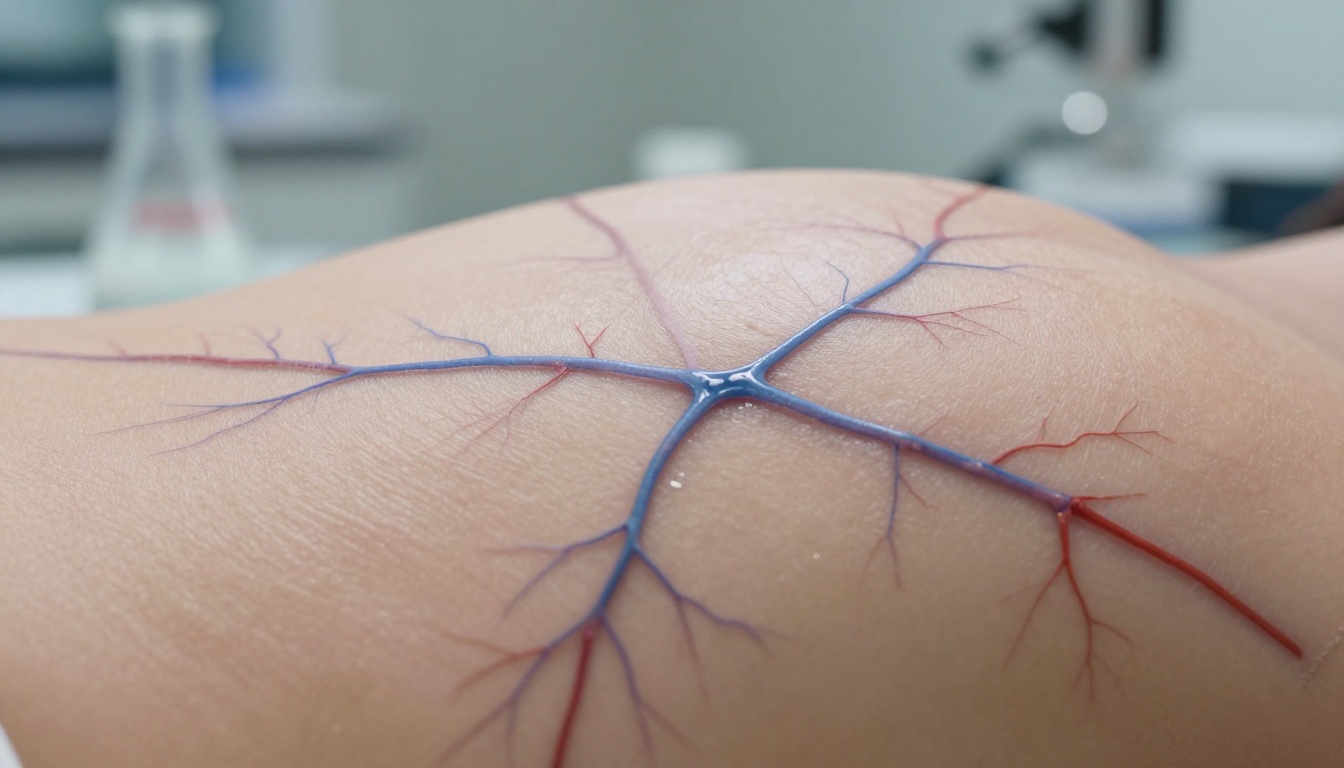
Researchers develop methods to visualize vascular networks in skin, offering potential insights for people with albinism's skin health management.
Understanding how blood vessels in our skin behave might help researchers develop better approaches to skin health—something particularly relevant for people with albinism who often require careful skin protection and monitoring.
Researchers from the Journal of Investigative Dermatology have outlined new techniques for visualizing the intricate network of blood vessels that lie within the skin's dermis. According to their study, these vascular networks play crucial roles in regulating body temperature, supporting immune function, and helping tissues heal.
The research team describes methods using intravital 2-photon microscopy—a sophisticated imaging technique—to observe blood vessels in mouse skin over extended periods. They specifically focused on the hairless skin of mouse paws, which provides a simplified model for tracking vascular changes over time.
Visualizing Vascular Dynamics
What makes this approach noteworthy is its ability to capture changes that occur over days or weeks. The researchers report using genetically encoded fluorescent markers that specifically highlight endothelial cells—the cells that line blood vessels—allowing them to observe how these vascular networks remodel over time.
For the albinism community, advances in understanding skin vascular dynamics could potentially contribute to better skin health management strategies. People with albinism often experience increased sensitivity to sun exposure and may face unique challenges related to skin circulation and healing.
While this research is still in early stages using animal models, it represents an important step toward better understanding the complex vascular systems that support skin health—knowledge that might eventually translate into improved approaches for monitoring and protecting the skin of people with albinism.
Keywords
Core topics and entities mentioned in this summary.