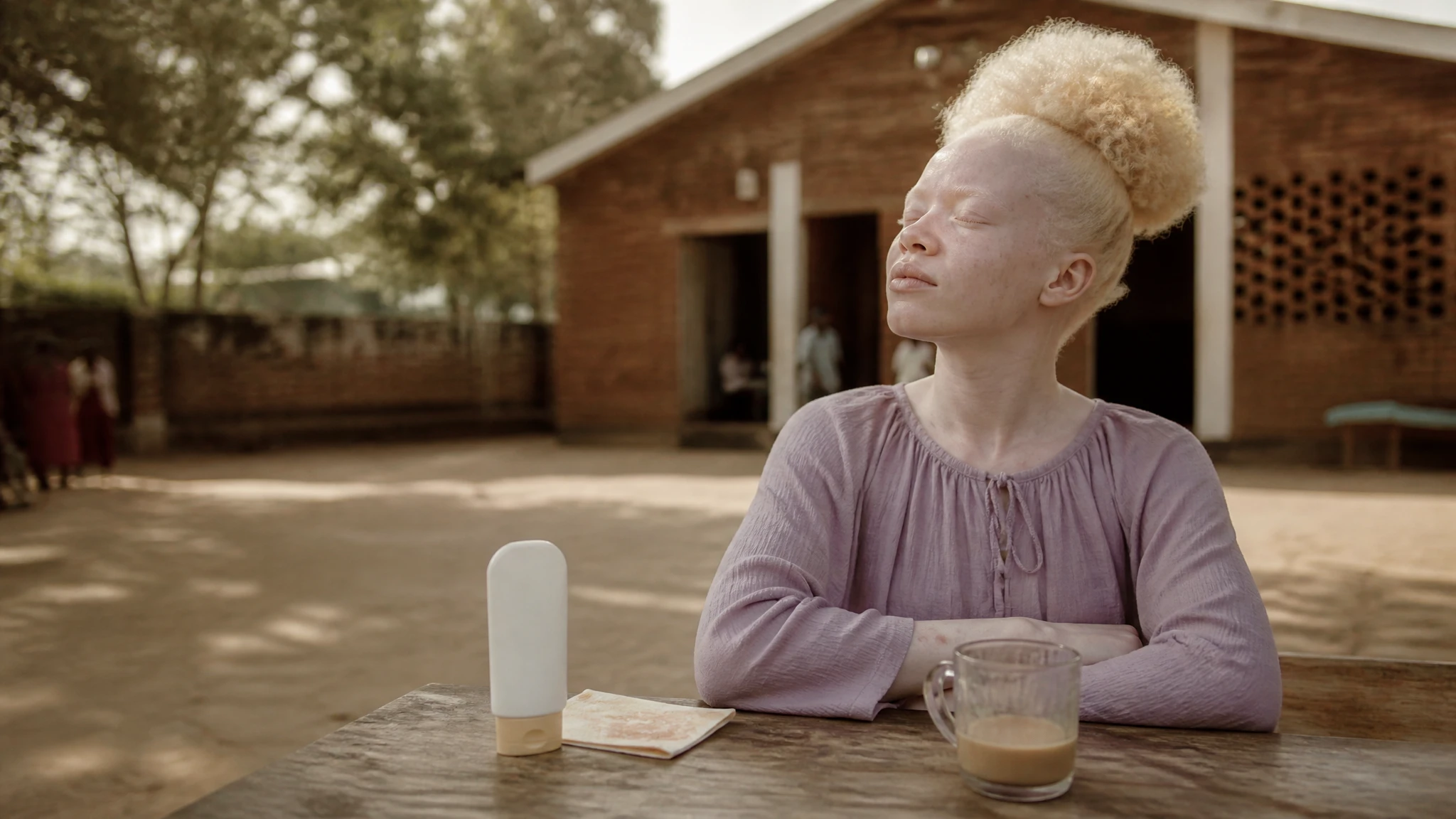
A University of Leicester team is moving albinism research beyond clinical walls, recruiting participants from everyday community settings for the first time.
A research team at the University of Leicester has begun recruiting people with albinism through community settings rather than hospital clinics — a shift that changes who gets counted in the science.
Most albinism research to date has drawn its participants from hospital ophthalmology or dermatology departments, according to the University of Leicester. That method captures people already engaged with specialist medical care. It leaves out the many who manage their condition without regular clinical contact, skewing what researchers know about how albinism affects daily life.
The Leicester study is designed to close that gap. By reaching participants outside hospital walls — through community organisations, support groups, and networks — the researchers aim to build a more representative picture of lived experience across the UK albinism population, the university reported.
What the study is measuring
The research focuses on vision, skin health, and quality of life, the university said. Participants complete assessments that do not require a clinic visit, making the study accessible to people in different parts of the country and with varying levels of healthcare engagement.
The team is led by researchers at Leicester's Department of Genetics and Genome Biology. Their approach reflects a growing recognition in rare-condition research that hospital-based cohorts can produce findings that apply only to a narrow subset of any given population.
Why this matters for the community
Community-based recruitment has been standard in many areas of public health research for decades. For albinism, it is relatively new. If the Leicester team succeeds in building a cohort that reflects the full range of people living with the condition — not just those with the most complex medical needs — the resulting data could inform care guidelines, education policy, and advocacy work in ways that hospital studies have not been able to.
The university has not yet published findings. The study is in its recruitment phase, and results are expected to follow in the coming years.
For a community that has often seen itself filtered through a medical lens, research that begins by asking broader questions — and asking them in broader places — is a different kind of starting point.
Keywords
Core topics and entities mentioned in this summary.