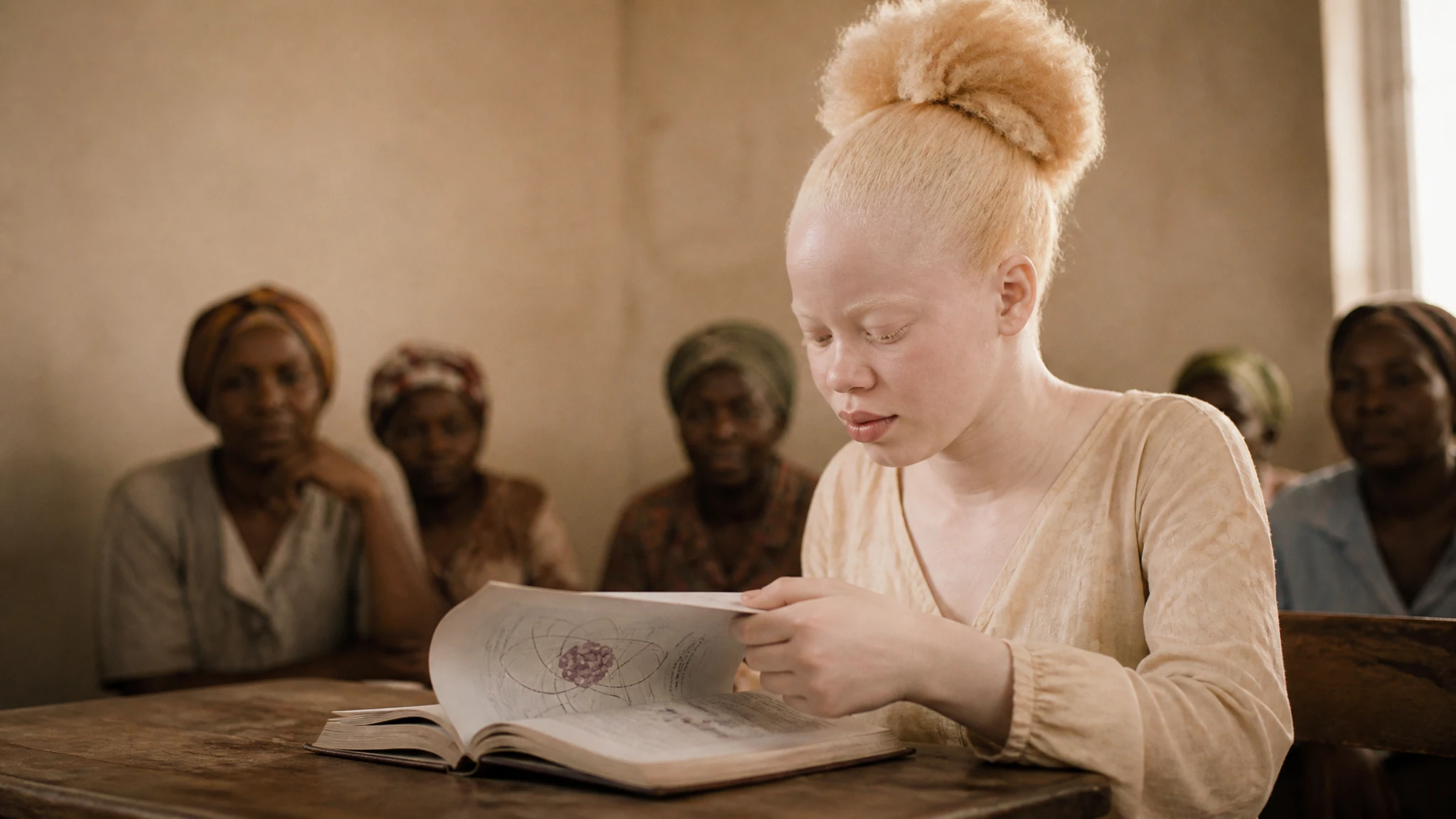
A report from The Citizen asks whether genetic understanding can displace the superstitions that put people with albinism at risk across East Africa.
In parts of East Africa, a person with albinism is sometimes described as a ghost, a curse, or a source of magical power. The explanation that a single gene variant causes reduced melanin production has not, so far, replaced those beliefs.
The Citizen reported on a question researchers and advocates have been asking with increasing urgency: can scientific literacy do what decades of awareness campaigns have not?
What the science says
Albinism results from mutations in genes responsible for melanin synthesis, according to the report. The most common form, oculocutaneous albinism type 2, is linked to variants in the OCA2 gene. The condition affects melanin in the skin, hair, and eyes — and carries no relationship to spiritual power, luck, or curse.
The Citizen noted that this explanation is straightforward in a laboratory. In communities where oral tradition, ritual belief, and economic desperation intersect, the genetic account competes with frameworks that have deep roots and, for some, material incentives.
The gap between knowledge and belief
Researchers and community health workers cited in the report have found that awareness of the genetic cause does not automatically shift attitudes. Knowledge and belief, they noted, operate on different tracks. A person can understand that albinism is inherited and still act on a superstition when under social pressure.
The report pointed to Tanzania as a country where this gap is visible in sharp relief. Educational programmes have run for years. Killings and attacks on people with albinism continue to be recorded. The Citizen described communities where schoolchildren with albinism learn about their own genetics in classrooms, then return to villages where their neighbours hold contradictory views.
Advocates quoted in the piece argued that science communication alone is insufficient. Changing belief, they said, requires sustained community dialogue, economic interventions that remove the financial logic behind attacks, and legal consequences that are consistently enforced.
Some researchers proposed that genetic counselling — offered to families rather than individuals — could shift understanding at the household level, where beliefs are formed and passed on. The report described this as a promising but underfunded direction.
The closing observation in The Citizen's piece was quiet and precise: in communities where people with albinism have been given visible roles — as teachers, local officials, health workers — the rate of stigmatising language has fallen. Representation, the report suggested, may do work that pamphlets cannot.
The article did not offer a resolution. The question it posed remains open, and the community living inside it continues to wait for an answer.
Keywords
Core topics and entities mentioned in this summary.