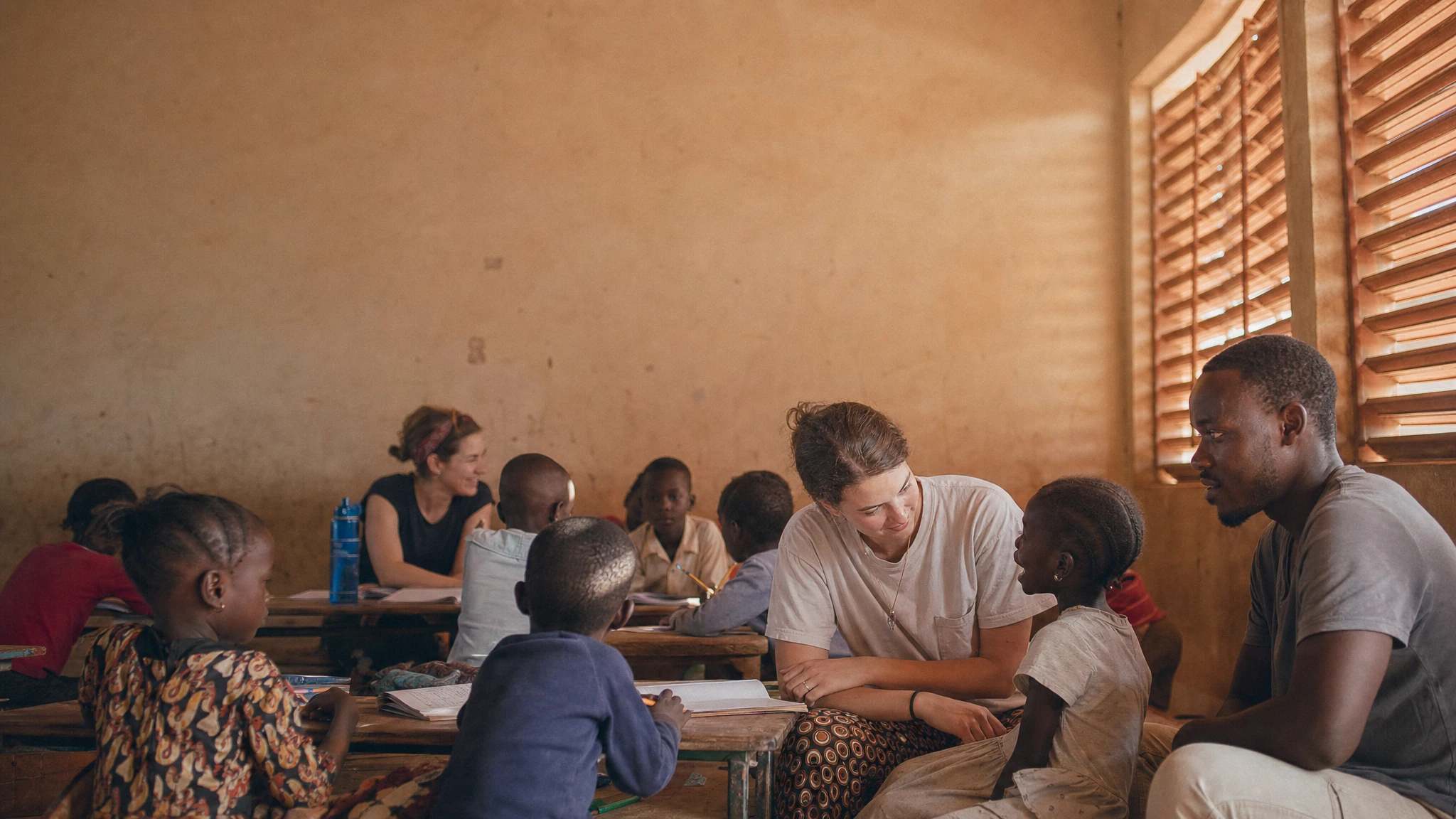
Community volunteers and schools in the Gambia are working to connect mental health with disability awareness, shifting how communities talk about difference.
A single column in a Gambian newspaper is carrying a particular kind of argument: that mental health and disability are not separate conversations.
Foroyaa's Environmental Column has turned its attention to the quiet work happening inside Gambian schools and community groups, where volunteers are attempting to link mental health awareness with broader disability inclusion — including, implicitly, the social experiences of people with albinism.
The column does not report a landmark study or a new law. It describes something smaller and harder to measure: a shift in how communities talk.
Volunteers in classrooms
According to the Foroyaa report, volunteers are entering school settings to open discussions that local curricula rarely make room for. The conversations, the column suggests, are reaching students who might otherwise encounter disability only through stigma or silence.
The work is not described as a formal programme. It reads, in the column's framing, more like a grassroots habit — people deciding to show up and speak plainly about difference.
Schools are not the only sites. Community gatherings are also named by the column as places where the conversation is being tested, adjusted, and slowly normalised.
Why the connection matters
For people with albinism in West Africa, the psychological weight of visibility is rarely discussed alongside the physical. Sun protection, vision support, and safety receive attention. The interior experience — stigma absorbed across a childhood, the cost of being looked at differently every day — receives considerably less.
The Foroyaa column does not make this case explicitly. But its framing, connecting mental health directly to disability inclusion, opens a space that the albinism community in the region has long needed recognised.
If volunteers and schools are genuinely broadening what disability inclusion means in Gambian public life, that broadening has consequences for every group that sits inside the category — including people with albinism, who face compounding pressures that are social and psychological as well as medical.
The column reports no outcome data, no participant numbers, and no named organisations. Its evidence is observational and local. But the conversation it describes — mental health as part of disability, not separate from it — is one that international bodies including the UN have been pressing governments to adopt formally for years.
What Gambia's volunteers appear to be doing, according to the Foroyaa report, is making that argument not in a policy chamber but in a classroom. That is a different kind of pressure, and sometimes a more durable one.
Keywords
Core topics and entities mentioned in this summary.