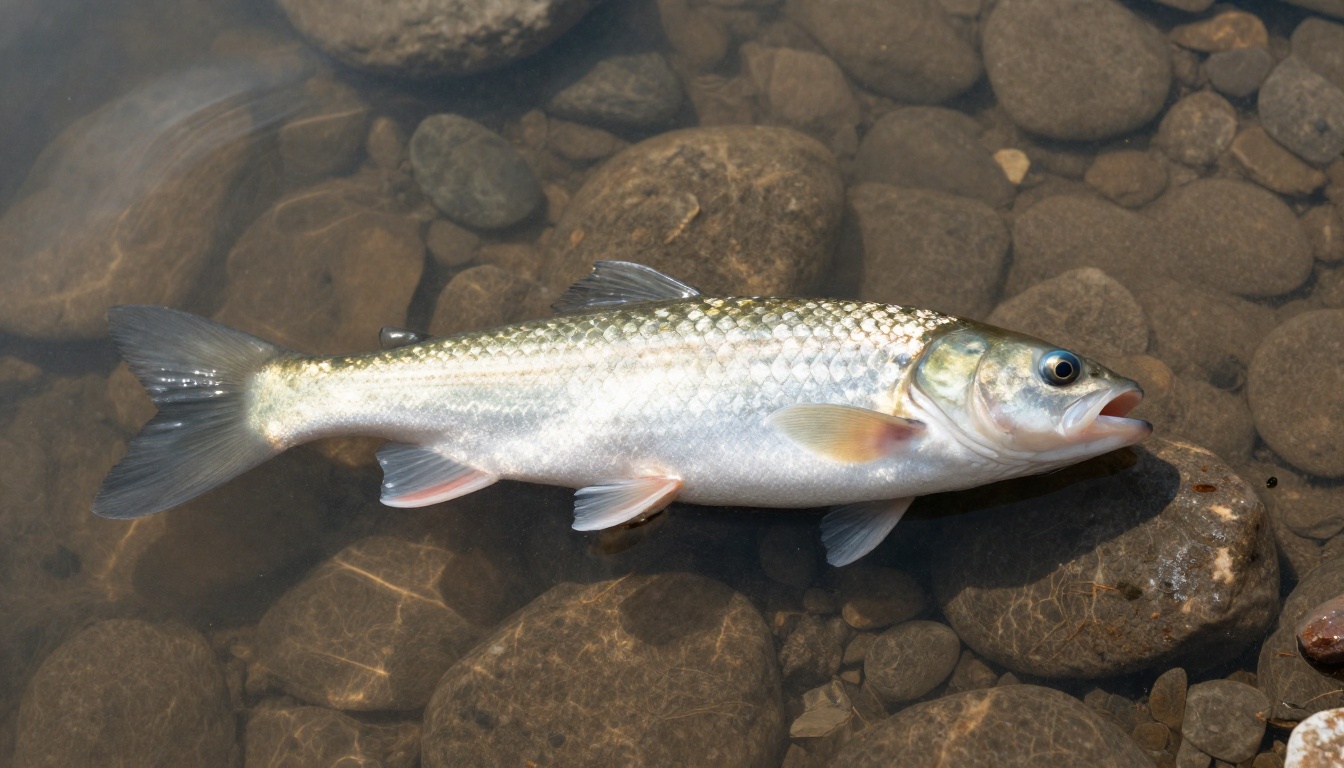
A look at the genetic condition causing albinism in bass species, what makes these fish special, and ethical considerations for anglers who encounter them.
Montana's waterways occasionally reveal a striking natural phenomenon - the albino bass. These ghostly white fish stand out dramatically against their typically colored counterparts, capturing the attention and curiosity of anglers and wildlife enthusiasts alike.
Albinism in fish, like in humans and other animals, is caused by a genetic mutation affecting melanin production. According to Montana Outdoor, these fish completely lack the pigmentation that gives regular bass their characteristic coloration, resulting in their distinctive white appearance and pinkish-red eyes.
The condition is exceedingly rare in wild fish populations. While exact statistics for bass specifically aren't widely available, albinism generally occurs in less than 1 in 10,000 individuals in most animal species. This rarity makes spotting an albino bass a truly remarkable event for any angler.
Understanding the Challenges These Fish Face
Fish with albinism face significant survival challenges in the wild. Their lack of protective pigmentation makes them more vulnerable to sunlight damage, and their high visibility to predators dramatically decreases their survival odds. The fact that any albino bass reaches maturity in natural conditions is testament to their remarkable adaptability.
For anglers fortunate enough to encounter one of these unique fish, Montana Outdoor suggests special handling considerations. These rare specimens deserve gentle treatment and prompt release. Photography is encouraged—with minimal handling and keeping the fish in water as much as possible—to document these unusual sightings while ensuring the fish's wellbeing.
Conservation Implications
While albino bass don't represent a separate conservation category, their rarity makes each individual valuable from a biodiversity perspective. These genetic variations, though challenging for the individual fish, contribute to our understanding of genetic diversity within bass populations.
For the albinism community, these fish offer an interesting parallel to human experiences. Both demonstrate how the same genetic condition manifests across species, while highlighting the universal importance of protection, adaptation, and appreciation of natural diversity.
Next time you're fishing Montana's waters, keep an eye out for these extraordinary fish. If you're lucky enough to catch one, remember: a quick photo, gentle handling, and respectful release ensures others might someday share in your remarkable encounter with one of nature's rare genetic variations.
Keywords
Core topics and entities mentioned in this summary.