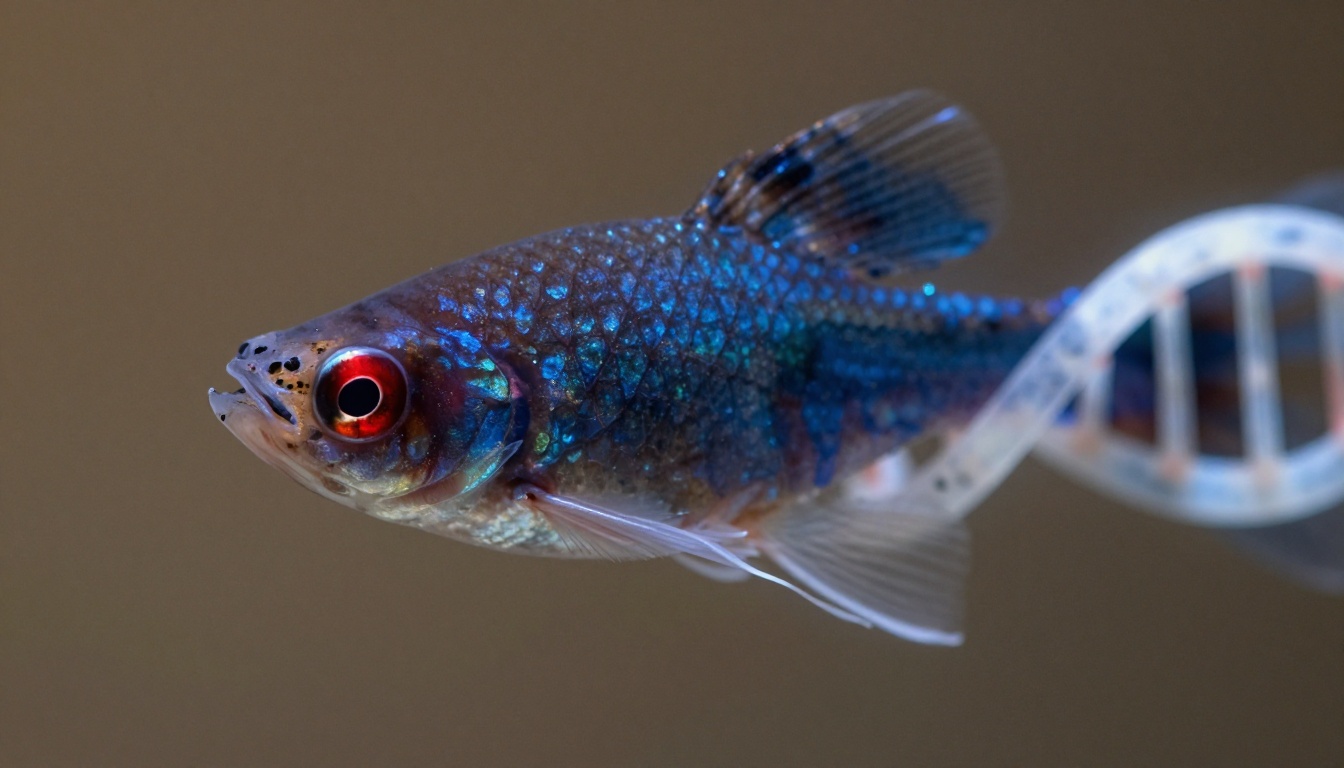
Scientists conducted a genome-wide study on guppies that could help understand the genetic basis of ocular albinism, with potential implications for human research.
A new genetic study has identified specific markers associated with ocular albinism in guppies, potentially opening doors to better understanding similar conditions in humans.
Researchers recently conducted a genome-wide association study (GWAS) focusing on the red-eyed trait in guppy fish (Poecilia reticulata), according to findings published in Wiley Online Library. The study specifically examined an F2 population of guppies to identify the genetic underpinnings of this form of ocular albinism.
Ocular albinism affects the pigmentation of the eyes and is characterized by the distinctive red-eye appearance in affected guppies. This condition shares some similarities with forms of ocular albinism found in humans, making these fish potentially valuable models for understanding the genetic mechanisms involved.
Genetic Markers and Inheritance Patterns
The researchers identified several genetic markers strongly associated with the red-eyed trait in these fish. By studying an F2 population—offspring from the breeding of first-generation hybrids—scientists were able to track how these genetic traits were inherited and expressed across generations.
While the study focused on fish genetics, such research contributes to the broader understanding of albinism conditions across species. Animal models like the guppy can provide valuable insights into the genetic pathways and mechanisms that may be relevant to human conditions.
Implications for Human Albinism Research
Understanding the genetic basis of ocular albinism in model organisms can potentially accelerate research into human albinism conditions. Though fish and human genetics differ significantly, many fundamental genetic mechanisms are conserved across species.
This type of comparative genetic research represents an important approach in modern biology, where insights from one species can inform understanding of similar conditions in others, including humans.
As research continues in this field, such studies may eventually contribute to improved diagnostic tools and potential therapeutic approaches for people with various forms of albinism.
Keywords
Core topics and entities mentioned in this summary.